


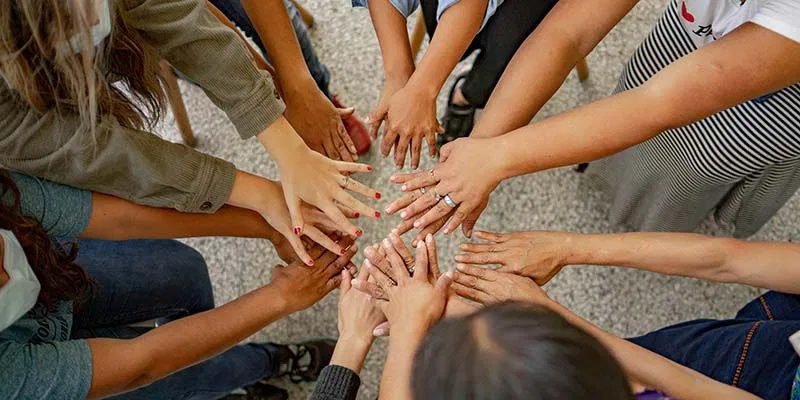
Resilience often sounds like a personal trait — something you build within yourself through discipline, mindset, or endurance. But in reality, true resilience thrives in connection. Communities, families, and workplaces that share trust, empathy, and cooperation bounce back faster from hardship than those that isolate under stress. Social cohesion — the sense of belonging and shared purpose — is the quiet strength that holds people together when life gets turbulent.
Whether it’s a neighborhood rebuilding after a disaster or a family navigating financial stress, resilience grows through collective effort. For instance, financial challenges like mounting credit card balances can strain not only individual well-being but relationships too. Seeking options like Credit Card Debt Relief can help alleviate personal stress, which in turn strengthens the collective resilience of families and communities by restoring stability and confidence.
The Power of Connection in Challenging Times
Humans are hardwired for connection. In difficult moments, the instinct to seek support isn’t a weakness — it’s survival. During the height of the COVID-19 pandemic, communities that organized neighborhood aid groups, shared food resources, and maintained social contact (even virtually) experienced higher levels of emotional stability. These acts of cohesion — big or small — create a network of reliability.
When people feel connected, they’re more likely to share information, resources, and solutions. This “social capital” not only supports individuals but also strengthens the entire system’s ability to adapt. According to the American Psychological Association, strong social networks are one of the most reliable predictors of community resilience during crises. Connection transforms adversity from a solitary struggle into a shared challenge.
Building Trust: The Foundation of Social Strength
Trust is the backbone of social cohesion. Without it, cooperation collapses and communities fragment. Trust grows through honesty, consistency, and shared experience. In workplaces, this might look like transparent leadership and genuine collaboration. In neighborhoods, it could mean volunteering, participating in local meetings, or simply checking in on neighbors.
When trust exists, people feel safe enough to rely on each other. This mutual reliability builds emotional security, which fuels resilience. You’re more likely to recover from hardship when you believe someone has your back. Trust doesn’t eliminate uncertainty, but it makes it easier to face it — together.
Shared Values Strengthen Shared Action
A community’s strength often comes from its shared values. Whether those values center on compassion, sustainability, or justice, they serve as a compass in difficult times. When people believe in something larger than themselves, cooperation becomes instinctive.
Shared values don’t mean uniformity — they mean alignment. Diverse groups can still unite around core principles like fairness or mutual respect. This unity of purpose fosters collaboration across differences, which is critical in addressing complex challenges like climate change, economic hardship, or public health crises.
For example, initiatives that promote community gardens, local business support, or mutual aid projects often succeed because they resonate with collective values such as self-reliance and cooperation. As The Brookings Institution notes, shared community goals not only improve social bonds but also create measurable resilience by boosting participation and mutual support.
The Ripple Effect of Helping Others
One of the most powerful aspects of social cohesion is reciprocity — the understanding that helping others today strengthens the safety net you may need tomorrow. Simple acts of generosity build invisible threads that weave communities tighter.
When people give time, share expertise, or lend emotional support, they reinforce a culture of interdependence. This doesn’t just help those in immediate need; it reinforces purpose and meaning for everyone involved. Studies consistently show that people who volunteer or engage in community activities experience lower levels of stress and greater life satisfaction.
In short, helping others is one of the most reliable ways to build personal and collective resilience at once.
Collaboration in the Face of Uncertainty
Resilient communities don’t wait for crises to happen — they prepare for them through collaboration. Planning together fosters unity and readiness. Local governments, organizations, and residents who coordinate efforts before problems arise respond more effectively when they do.
This applies beyond physical disasters. Economic uncertainty, for example, can be mitigated through community education, job training programs, and financial literacy initiatives. These shared investments create a stronger safety net and a sense of agency among members.
Even on a smaller scale, collaboration builds problem-solving skills that benefit everyone. When people work together toward solutions, they develop confidence not only in themselves but in their collective capacity to overcome obstacles.
The Emotional Side of Social Cohesion
Beyond practical benefits, social cohesion fulfills deep emotional needs. Connection provides validation, belonging, and hope — all of which are essential for navigating stress. Feeling isolated amplifies hardship, but being surrounded by support softens its impact.
Creating spaces for open dialogue, empathy, and shared expression helps communities process trauma and heal together. Whether it’s through support groups, cultural events, or storytelling initiatives, these efforts remind people that they’re not alone in their struggles.
Resilience isn’t just about bouncing back — it’s about growing stronger because of what’s shared.
From Individual Action to Collective Impact
Each of us plays a role in strengthening social cohesion. You don’t need to start a movement to make a difference. Small, consistent actions — like introducing yourself to a new neighbor, offering help, or attending local events — build trust and unity over time.
When individuals make these gestures regularly, the effects compound. A single act of kindness can inspire others, creating a ripple that reinforces connection throughout a community. Over time, these micro-moments of support form the foundation of resilience.
Conclusion: Resilience Is a Shared Resource
Resilience doesn’t belong to individuals — it belongs to communities. The ability to adapt, recover, and grow from adversity depends as much on relationships as it does on resources. When people work together with empathy, trust, and shared purpose, they create a buffer against life’s unpredictability.
Social cohesion isn’t just a feel-good concept; it’s a survival strategy rooted in humanity’s oldest strength — connection. By investing in each other, we build more than community bonds; we build the foundation for a resilient, thriving future.

